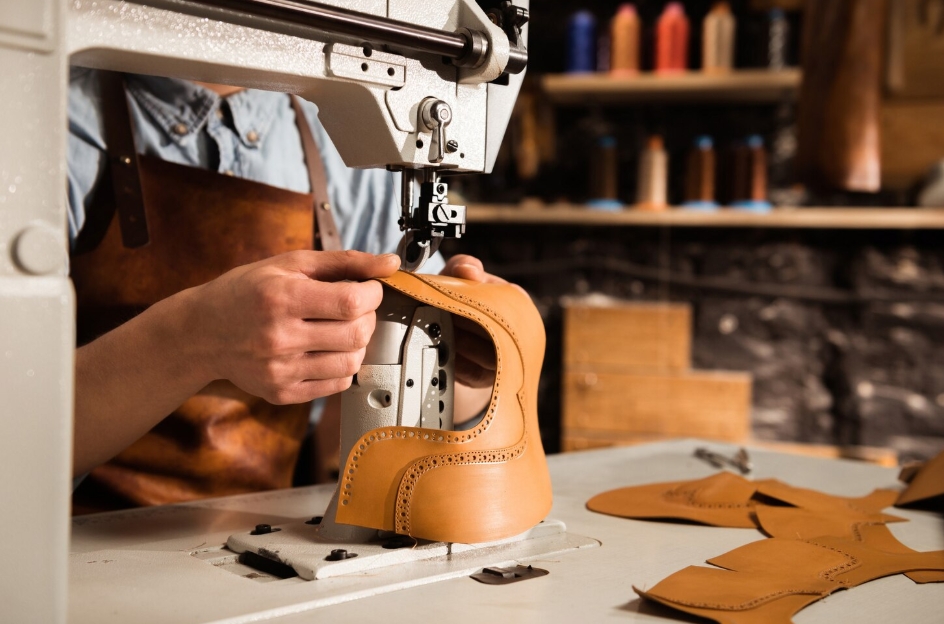
Footwear can be a tricky product, with styling, usability, wearability, and durability all having to coexist. A good seam is well noted during the footwear development process, but leather, mesh, textiles, synthetic leather, rubber, and foam are well documented. A well-designed seam leads to good integrity of the product from component to component during its life.
The choice of sewing thread is merely a part of footwear seam engineering. The construction of the thread, density of the seams, needle size, seam allowance, thickness of the material, machine settings, and the forces that a specific portion of the shoe will endure are all factors that should be taken into account when deciding on stitching. With the setting of these parameters, manufacturers will be able to get stronger seams, fewer sewing defects, better looks, and longer durability of products.
Seam Engineering on Footwear
The upper, lower, quarters, tongues, linings, reinforcements, and decorative panels are joined together by footwear seams. Different mechanical forces may occur at each location.
For instance, seams that are located in the toe box area may bend over and over repeatedly, while seams in the heel area may stretch and rub. Footwear used for sports will flex thousands of times, while safety and/or industrial footwear is subjected to abrasion, chemicals, moisture, and mechanical stresses.
A valuable first step in designing good seams is to first determine the functional needs of each seam instead of specifying the same sew characteristics for all seams.
Key considerations include the following:
- Material type and thickness
- Seam location and construction
- Expected tensile and flexing loads
- Thread strength and elongation
- Stitch density
- Needle size and point
- Sewing speed
- Required visual appearance
- Environmental exposure
Selecting the Right Sewing Thread
Thread is among the most crucial factors of shoe performance. Typically, polyester or nylon fabrics are used due to their strength, durability, malleability, and sewability.
Polyester threads are especially great for sneakers that might be in touch with moisture and the sun, as well as tough exterior circumstances. These have good dimensional stability and resistance to a number of chemicals.
Bonded nylon thread are very strong and bend easily and may be used to make seams that require a lot of movement and rubbing. But, selection of nylon should be based on environmental exposure and application needs.
In demanding uses, a high-tenacity or special thread design (polyester embroidery thread) that will be stronger and more resistant to fatigue may be utilized.
Also, the size of the thread is crucial. If the thread is too thin, it might not have strong stitches or seams, and if it is too thick, it will cause the seam to become bulky, will make it harder for a needle to hold onto, and will form poor stitches.
The Importance of Stitch Density
Stitch density is based on the number of stitches created over a given distance of seam. It plays a direct effect on seam strength, appearance, flexibility, and damage to materials.
The thicker the stitches, the stronger the seam is not necessarily. Over-stitching results in additional penetrations, which may cause some materials to have too many perforations close together, causing a weakening in the material. It may also require more thread and time when putting thread through the machine.
On the other hand, sparse stitching can compromise the closure of seams or end up being ugly.
The optimal stitch density is related to the following:
- Material thickness
- Material construction
- Seam type
- Thread size
- Required seam strength
- Expected flexing
- Product design
If the sewing is too tight on flexible shoes, it can hinder movement and prevent seams from flexing. In cases of heavy-duty footwear, a targeted density may be needed to ensure the required structural performance.
Matching Thread and Stitch Density
The two properties of thread and stitch density must not be judged separately. They work in the same seam system.
Using a heavier thread than recommended and too many stitches can add a stiffness to the seams and cause undue tension around the needle holes. This is not going to have much stitch density and may not be strong enough.
The aim is to output a balanced size, strength, and stitch density of thread and characteristics of the material.
The manufacturer should carry out sewing trials to determine the best mix and not simply rely on the theoretical specification.
Material Performance and Seam Behavior
The various constructions of footwear react in various ways to the punctures of needles and the tension of the thread.
Unlike woven textiles, leather may not recover after getting needled. Excessive penetration will cause a perforated effect and loss of material strength.
The resistance to delamination and tearing can vary between synthetic leather and the mesh materials, and some care may be required to prevent the material from distorting when handling it. Material that is knitted or highly flexible can necessitate seams that can give a great range of freedom.
Additionally, multi-material footwear raises a problem. If the structure was not well-designed or engineered, the seam of materials made may be the spot where the structure fails when combined with materials of different elasticity, thickness, or strength.
So, it is always important to consider the seam as part of the material compatibility.
Needle Selection and Machine Settings
Simply choosing the right thread doesn’t ensure an effective seam. The needle should be the right size for the needle and thread and the material.
The following symptoms may result from using an improperly sized needle:
- Material damage
- Thread breakage
- Skipped stitches
- Needle deflection
- Enlarged needle holes
- Poor stitch appearance
It is imperative that machine tension be carefully controlled as well. If there is too much tension, it can cause the fabric to rip or tear, or the thread to overstitch. If the tension is not enough, the stitches are loose and inconsistent.
Another factor is speed of sewing. Friction and heat caused by high-speed operations can have an impact on the performance of threads. These problems can be controlled by proper use and upkeep of the machines and threads.
Maximising Seam Strength Without Sacrificing Flexibility
Footwear seams must often withstand two apparently opposing requirements: strength and flexibility.
Under static tensile testing a seam could have extremely high strength but fail under flexing. This is a specific problem in athletic shoes, as the upper needs to move with the foot.
Hence, the static and dynamic performance should be evaluated by the engineer. Some tests could include fabrication properties like tensile strength, seam slippage, abrasion resistance, repeated flexing and fatigue.
The goal is as much as possible to develop a strong seam and as much as possible to develop a seam that will meet its task throughout the product’s service life.
Seam Engineering for Different Footwear Categories
There are different types of shoes and different types of seams.
- Athletic footwear: Lightweight threads, controlled stitch density, flexibility, and fatigue resistance are critical.
- Stockings for outdoor footwear: They should be moisture, UV, abrasion and temperature resistant.
- Safety footwear: High seam strength and resistance to mechanical stress are particularly important.
- Fashion footwear: Apart from their structural properties, their looks and stitch regularity and decoration properties might be more emphasised.
- Heavy-Duty Working Boots: These may need to have rugged constructions and tough repair details to cope with demanding working conditions.
Testing and Quality Control
Systematic testing is required for a successful sewing design programme. Production teams need to monitor thread failures, skipped stitches, seam puckering, needle damage, variability of tension and consistency of stitches.
Sew strength, abrasion resistance, flex durability and environmental performance are examples of areas that can be tested in the laboratory or production lines. Additionally, manufacturers can use statistical process control to detect variations before they turn into a problem in their entire production chain.
Note that importantly, “tests” should reflect the actual use of footwear. The good performance in the laboratory under static conditions does not guarantee the same performance under repeated flexing, laundering, abrasion and/or moisture exposure.
Conclusion
Seam technology passes between a number of disciplines, including thread technology, stitch design, material science and manufacturing efficiency – this is called “seam engineering”. Using the appropriate thread, stitches, needle type and machine setting, and understanding the tactics of different types of materials can make a big improvement for footwear quality. Meanwhile, manufacturers are faced with a challenge of balancing the strength with flexibility, appearance, production speed, and costs.
The use of precise seam engineering will become even more crucial because shoe designs become more complex, incorporating more than one material and requiring increased durability and sustainability. Through testing and optimising each seam by its use, manufacturers can minimise defects, enhance footwear performance and manufacture a footwear product that exceeds ever-worsening consumer and industrial requirements.